
What is the difference between holographic projection and phantom imaging?
Release date:
2022-03-10 11:07
Source:
Holographic projection Also known as virtual imaging technology, it is a technology that uses the principles of interference and diffraction to record and reproduce the true three-dimensional image of an object. Holographic projection is a technology that allows you to experience a three-dimensional stereoscopic effect without wearing 3D glasses. Holographic projection can not only create a three-dimensional illusion in the air, but also allow the virtual image to interact with the performer, completing the performance vividly and tacitly, giving the audience a shocking performance effect.
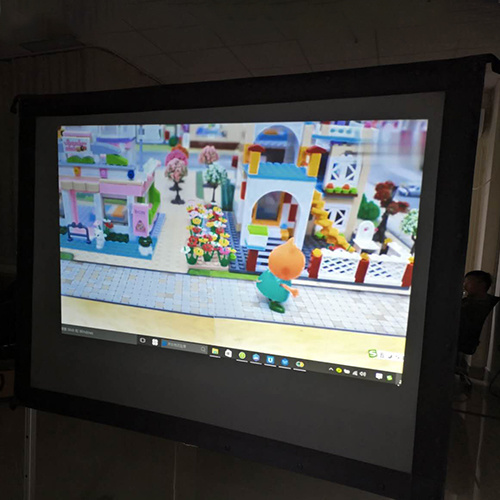
Holographic projection Advantages
1. It has advantages that other projection technologies cannot match. One direct point is that virtual things can be seen directly with the naked eye.
2. No longer bound by traditional 3D sound, electricity, and light, the projected images are high-definition and vibrant, giving people a shocking feeling.
3. Another major feature is its strong three-dimensional effect, which allows people to immerse themselves in virtual impressions and experience the fun of 360-degree projection.
4. The display is not limited by the occasion. It can support multi-angle holographic projection and display in different ways.
The phantom imaging system is a virtual imaging system formed by combining the real modeling of virtual images and optical imaging. It projects the images, characters, or things that need to be photographed into the landscape of the main model to show the development and changes of the event. It is not real, the demonstration process is intuitive, giving people an immersive feeling, making people linger and leaving an unforgettable impression.
Advantages of phantom imaging:
1. It is not limited by factors such as the venue and can be adjusted according to the size of the venue. It has been widely used abroad and is gradually being applied to various museums, celebrity former residences, centuries-old towns, historical streets, theme parks, cultural relic parks, urban planning exhibition halls, etc.
2. It can reveal a phenomenon, demonstrate laws, explain scientific principles, explain stories, establish corporate image, introduce products, analyze data curves, and some scenes where it is not suitable for people to enter in dangerous environments.
3. With the rapid development of information technology worldwide, especially the popularization and application of digital technology. Using information expression intuitive and concentrated centralized information management methods will make all management work more rigorous and effective, and services more convenient and efficient. As a modern imaging technology, the phantom imaging system has been widely used in various fields of national economic production in China.
Relationship between holographic projection and phantom imaging
Phantom imaging is Holographic projection part of it, meaning that 3D images can be viewed from all angles without wearing 3D glasses. In holographic projection, holographic film plane imaging is now applied, such as the common 360 pyramid imaging model. Phantom imaging reflects the bottom or top image by tilting the glass at 45 degrees. The image can be a modified image displayed on a TV, or a picture projected by a projector. In comparison, phantom imaging technology is much simpler and clearer than holographic projection technology, and the effect will be simpler than holographic projection.
Holographic projection
Related News
Over 13 years of expertise in holographic projection
Specializing in imported holographic projection films and holographic display cabinets; providing construction services for holographic phantom stages; and offering large-scale, motorized holographic fabric curtains.
Contact Us
Phone:86-755-29469731
Service hotline:400-066-5016
Fax: 86-755-27490661
Email:lipingwang@szavst.com
Address: Room 402, Building A, Xinda Science & Innovation Park, No. 10 Baotian 2nd Road, Bao'an District, Shenzhen City, Guangdong Province
Copyright © 2023 Shenzhen Dilone Audiovisual Co., Ltd.